
Multi-Channel Marketing Campaigns: Channels, Examples and Strategy
Customers interact with businesses in different ways. They may discover a company through a Google search, see an advertisement on social media, receive an email or visit a physical store. A multi-channel marketing strategy helps businesses reach their audiences through several of these channels.
However, using more channels does not automatically produce better results. The goal is to select the channels that suit your audience, coordinate your messages and measure whether your marketing activities support your business objectives.
In this guide, we explore the main marketing channels, practical campaign examples and ways small and medium-sized businesses can build a more effective marketing strategy.
1. What Is Multi-Channel Marketing?
Multi-channel marketing means using more than one channel to communicate with customers and promote a business’s products or services.
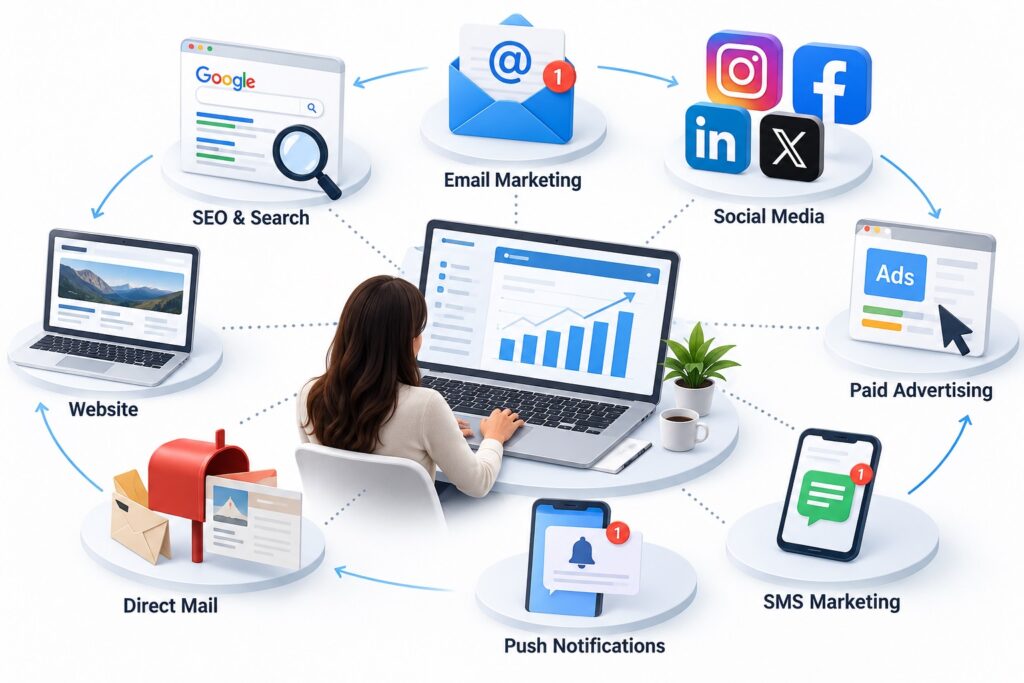
These channels can include a website, search engines, email, social media, paid advertising, text messages and traditional marketing activities such as direct mail.
Each channel can serve a different purpose. A search campaign may reach people actively looking for a service, while social media content may introduce a business to a new audience. Email can help maintain relationships with existing customers.
Multi-channel marketing does not necessarily mean that every channel is connected through one system. The important first step is to choose relevant channels and ensure that their messages support the same business goals.
2. Common Marketing Channels
The right channel mix depends on the audience, the offer, the budget and the way customers make purchasing decisions.
Website and Search Engine Optimization
A website gives customers a place to learn about a business, explore its services and take the next step.
Search engine optimization (SEO) can help relevant pages appear in unpaid search results. Useful content, clear service pages, effective site structure and sound technical practices all contribute to a stronger search presence over time.
For service-based businesses, a well-organized website should explain what the company offers, who it serves and how potential customers can get in touch.
Email Marketing
Email is useful for sharing updates, educational content, offers and follow-up messages with people who have agreed to receive communications.
For example, a business could send a welcome email after someone subscribes, followed by useful information related to that person’s interests.
Effective email marketing depends on relevant content, appropriate sending frequency, permission and a clear reason for each message.
SMS Marketing
Text messages can be suitable for short, time-sensitive communications, such as appointment reminders, delivery updates or limited-time offers.
Because text messages are direct, businesses should use them carefully. Obtain the required consent, respect applicable Canadian anti-spam and privacy requirements, and make it easy for recipients to withdraw consent where required.
SMS should complement other channels rather than become a source of excessive or unwanted messages.
Social Media Marketing
Social media can help businesses introduce their brand, share useful content, answer questions and build relationships with their audiences.
The most suitable platforms depend on the customers a business wants to reach. A business serving other companies, for example, may prioritize professional networking and industry-focused content, while a consumer brand may use visual platforms to demonstrate its products.
Consistent publishing and genuine engagement are generally more useful than maintaining accounts on every available platform without a clear plan.
Paid Digital Advertising
Paid advertising can help businesses reach selected audiences through search engines, social networks and other advertising platforms.
Search ads can be useful for reaching people actively looking for particular services. Social advertising can help introduce an offer to a relevant audience, while remarketing may reconnect with eligible visitors who have previously interacted with a business.
Campaigns should have a defined objective, a realistic budget and a suitable landing page. Performance should be evaluated using qualified leads, sales and other business outcomes rather than clicks alone.
Push Notifications
Web and mobile push notifications allow businesses to communicate with users who have opted in to receive them.
Depending on the business, they can support relevant updates, reminders or selected offers. Their usefulness depends on timing, relevance and user expectations.
Avoid sending frequent notifications simply to increase engagement. Every message should offer a clear benefit to the recipient.
Direct Mail and Traditional Advertising
Direct mail, print advertising, radio and other traditional channels may still be useful when they fit the target audience and campaign objective.
For example, a local business could distribute a printed offer in a defined service area and include a QR code leading to a dedicated landing page.
A unique promotional code or trackable web address can help the business understand which campaign generated inquiries. The method should be simple enough to measure and practical for the intended audience.
3. Practical Examples of Multi-Channel Marketing
A multi-channel strategy does not need to be complicated. The following examples illustrate how businesses can coordinate several channels around a specific objective.
Example One: Attracting New Customers
Imagine a local business that wants to generate more inquiries for its services.
The campaign could include:
-
SEO: Improve the relevant service page so it answers common customer questions.
-
Paid search advertising: Reach people searching for services the business provides.
-
Social media: Share helpful information that explains the service and builds familiarity.
-
Landing page: Direct interested visitors to a page with a clear explanation of the offer and an inquiry form.
-
Email follow-up: Respond to people who have requested information and agreed to receive further marketing communications.
The business can then measure qualified inquiries, conversion rates and the cost of acquiring a customer.
Example Two: Welcoming New Customers
An online store wants to build a better experience for new customers.
A possible sequence could be:
-
A customer subscribes to the store’s email list and receives a welcome email.
-
The customer visits the website to explore a product category.
-
The business shares relevant product information through its regular marketing channels.
-
If the customer makes a purchase, the store sends an appropriate order confirmation and delivery updates.
-
With the required consent, the business may later send relevant product recommendations or offers.
Each message should reflect the customer’s actual interaction with the business. Transactional updates and promotional messages should be treated appropriately, and marketing communications should follow applicable consent requirements.
Example Three: Re-Engaging Existing Customers
A business wants to encourage previous customers to return.
It could send a relevant email to eligible customers, publish useful new content on social media and use paid advertising to reach an appropriate audience.
A loyalty offer may also be suitable if it provides genuine value. The business should avoid contacting customers too frequently or assuming that every previous customer remains interested.
Success can be evaluated by measuring repeat purchases, customer retention and the revenue generated by the campaign.
4. How to Coordinate Your Marketing Channels
Using several channels effectively requires planning. Without coordination, customers may receive repeated messages, encounter conflicting offers or struggle to understand what the business wants them to do.
Define One Clear Campaign Objective
Start with a specific goal, such as generating qualified leads, increasing online sales, promoting a service or encouraging repeat purchases.
Choose a primary measure of success before selecting the channels.
Understand Your Audience
Consider where your customers search for information, which questions they ask and what influences their decisions.
Use available customer feedback, website analytics and campaign results to guide your choices rather than relying entirely on assumptions.
Keep Your Message Consistent
Your website, advertisements, emails and social media content should communicate an accurate and consistent value proposition.
The wording and format can vary by channel, but the offer, brand identity and essential information should remain aligned.
Connect Each Channel to a Clear Next Step
Every campaign should guide the audience toward an appropriate action, such as reading a service page, requesting a consultation, making a purchase or subscribing to updates.
Ensure that links work, landing pages match the campaign message and visitors can complete the intended action easily.
Measure and Improve
Review campaign performance regularly. Identify which channels generate meaningful results, where potential customers leave the process and which messages or landing pages need improvement.
Use these findings to refine the campaign instead of automatically increasing the number of channels or the advertising budget.
5. How to Choose the Right Channel Mix
There is no universal combination that works for every business. A small business with limited resources may achieve better results by managing two or three suitable channels well than by spreading its efforts across many platforms.
Consider the following questions:
-
Audience: Where can you reach the people most likely to need your products or services?
-
Objective: Are you trying to build awareness, generate leads, make sales or retain customers?
-
Budget: What can you invest consistently in content, advertising and campaign management?
-
Resources: Can your team maintain the selected channels and respond to inquiries promptly?
-
Measurement: Can you track the outcomes that matter and use the results to improve future campaigns?
Start with the channels most closely connected to your objectives. Once you understand their performance, expand the strategy when there is a clear business reason to do so.
6. Common Multi-Channel Marketing Mistakes
Several mistakes can reduce the effectiveness of a campaign:
Using too many channels at once. Expanding before establishing a clear strategy can divide resources and make results harder to interpret.
Sending the same message everywhere. Different channels have different formats and audience expectations. Adapt the content while keeping the core message consistent.
Focusing on activity instead of results. Likes, impressions and website visits can provide useful context, but qualified leads, sales and retention may be more important business measures.
Ignoring the customer experience. Broken links, slow pages, confusing offers and delayed responses can undermine an otherwise effective campaign.
Overlooking consent and privacy. Email, SMS and audience-targeting activities must respect applicable legal requirements and customer preferences.
Failing to review performance. Marketing should be an ongoing process of measuring, learning and improving—not simply publishing content or launching advertisements and leaving them unchanged.
Conclusion: Make Every Marketing Channel Work Toward a Shared Goal
Multi-channel marketing gives businesses several ways to connect with customers throughout their decision-making process. Websites, SEO, email, social media, paid advertising and traditional channels can each contribute when selected for a clear purpose.
The key is not to use every available channel. It is to understand your audience, coordinate your communications, provide a consistent customer experience and measure meaningful results.
For small and medium-sized businesses, a focused strategy can help make marketing more manageable and support better decisions about where to invest time and budget.
Mass Advertising helps businesses plan and coordinate digital marketing activities around their goals, audiences and available resources.
If you are looking to improve your marketing approach, start by identifying your main business objective and selecting the channels most likely to support it.